The Lobby as Office: How Hotels Are Reconverting Their Ground Floor Into Workspace
For a century, the hotel lobby had one job: process arrivals and departures. Today it is being asked to generate revenue from people who never sleep there.
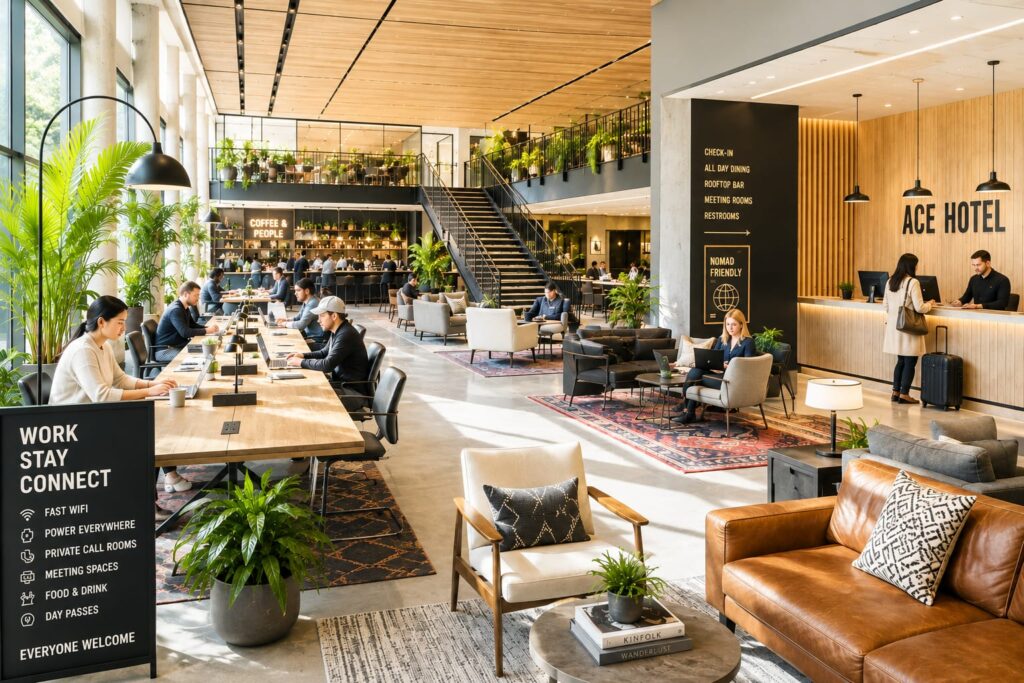
For a century, the hotel lobby had one job: process arrivals and departures. Today it is being asked to do something else entirely — generate revenue from people who have no intention of ever sleeping there. Across the hospitality industry, the check-in desk is being pushed to the margins while the center of the room fills with desks, sockets, and Wi-Fi routers built for eight-hour workdays, not eight-minute check-ins.
This is not a cosmetic redesign. It is a structural repositioning of the ground floor as an asset class — and, like any repositioning, it has produced both standout successes and a cautionary tale worth studying just as closely.
A Cross-Current With the Office World
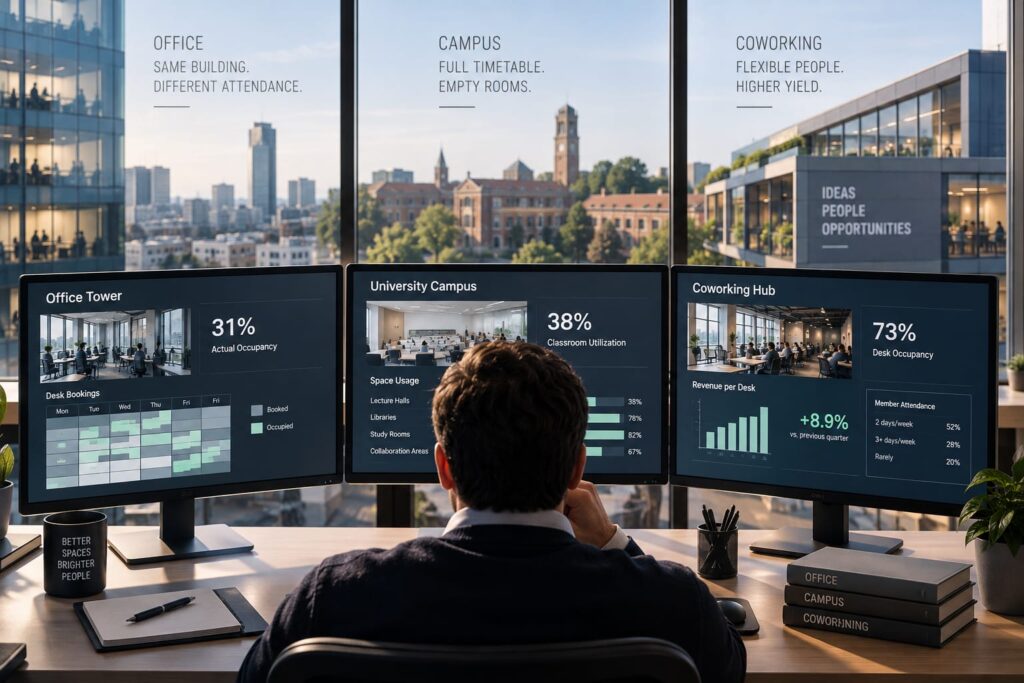
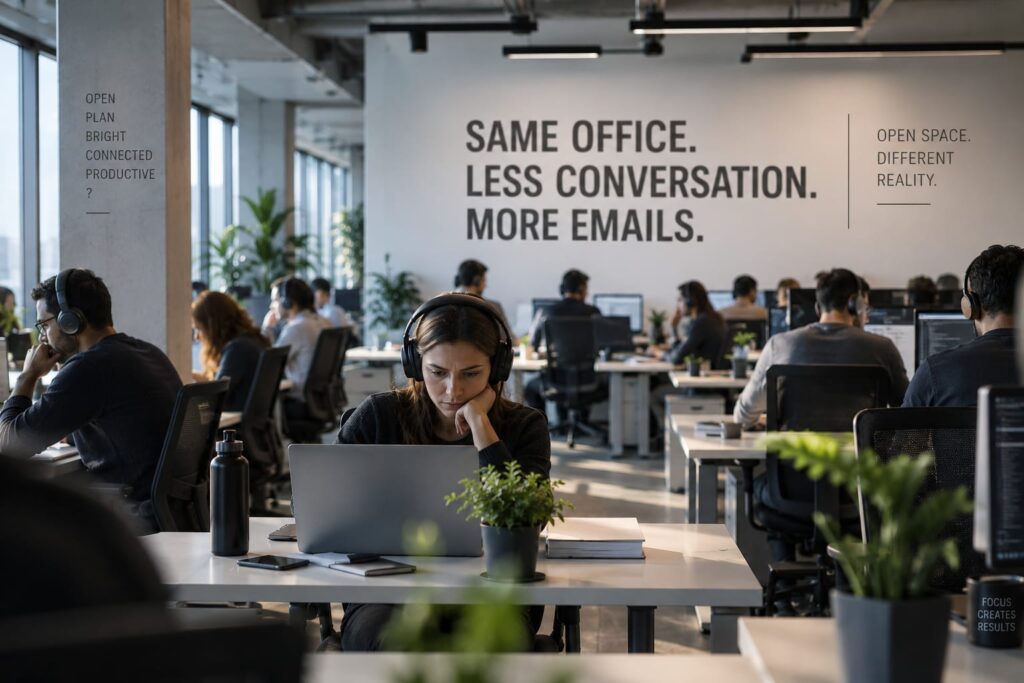
The trend runs in both directions at once. Corporate offices have spent the last five years borrowing from hospitality — softer furniture, F&B counters, ambient lighting — a shift the industry has labeled the “hotelification of the office.” Hotels are doing the mirror move: their lobbies are turning into de facto coworking floors, with lounge seating and multipurpose zones replacing the traditional check-in counter as the room’s focal point. JLL’s forecast makes the scale of this shift concrete: flexible space is projected to reach 30% of total office stock by 2030, up from just 2% in 2023 — a fifteen-fold increase in under a decade.
The underlying driver is simple economics of foot traffic. Guests were already opening laptops in hotel lobbies for the price of a single coffee; hospitality brands realized that an occupied armchair is either a cost to be tolerated or a revenue stream to be designed for, and increasingly they are choosing the latter.
Case One: Ace Hotel New York — The Reference Model
The Ace Hotel in New York is generally credited as the first mover. Its lobby was rebuilt around comfortable workstations in an informal, wifi-equipped environment, initially reserved for hotel guests. Demand proved to extend well beyond them: creatives and designers began treating the space as their default work address, prompting Ace to open it to the public and add private call rooms, rentable lockers, and bookable meeting space.
The model spread quickly. Marriott, Sheraton, and Mama Shelter each adopted variations of the concept, with Mama Shelter positioning itself explicitly around a digital-nomad clientele. What makes Ace’s case instructive is the sequencing: the space wasn’t designed for coworking from day one — it was designed for ambiance, and the workspace layer was added in response to observed behavior. That is a replicable lesson for any operator retrofitting an existing lobby rather than building one from scratch.
Case Two: The “Work From Hotel” Day-Pass Programs
Where Ace Hotel converted common areas, the major chains converted the inventory itself. Marriott’s Day Pass, Stay Pass, and Play Pass packages — rolled out across more than 2,000 properties — let guests check in as early as 6:00 a.m. and check out at 6:00 p.m., using the room purely as a private office with enhanced Wi-Fi, business services, and food and beverage included. Hilton and Hyatt launched comparable day-rate products around the same period, and independent properties such as the Thompson Nashville and the James New York–NoMad followed with their own versions. The commercial logic here is worth underlining: a hotel room sold as a day-use workspace monetizes an asset that would otherwise sit empty during off-peak hours, and — as one industry consultant noted — day-use guests place minimal demands on housekeeping and maintenance relative to overnight stays, making the margin structure attractive even at a discounted rate. Marriott’s own research found that 42% of surveyed travelers would consider booking a work-from-hotel package, citing inadequate home Wi-Fi and cramped home offices as primary motivations — evidence that the demand side of this market is not a niche.
Case Three: Selina — A Cautionary Counterpoint
Not every attempt to build a business around this convergence has worked, and the failure is as informative as the successes. Selina built its entire identity around digital nomads: coworking memberships, F&B, and experience fees alongside room revenue, with non-room products accounting for roughly 40% of total income at its peak. The company went public via SPAC in 2022 at a $1.2 billion valuation and expanded to more than 160 locations.
By late 2024, Selina had lost more than 99% of that valuation and was acquired out of insolvency by Collective Hospitality, which closed 60 of the remaining properties and rebranded the surviving 22 as Socialtel. The postmortem consensus is that Selina’s model bet too heavily on a single, financially fragile customer segment — young, mobile, discretionary-income travelers — without the unit economics to support the scale of its expansion. For an operator considering lobby-as-coworking as a strategy rather than an amenity, Selina is the reminder that occupancy and buzz are not the same as durable margin.
What This Means for Workplace Strategy
Three patterns emerge for anyone tracking workspace design as a competitive variable rather than a decorating choice:
- The lobby is becoming a P&L line, not a lounge. Multifunctional ground-floor space is now a projected growth driver in a hospitality design market expanding at 9.6% annually, not an aesthetic afterthought.
- Retrofits can outperform ground-up concepts. Ace Hotel’s incremental, demand-responsive approach has proven more durable than Selina’s built-from-scratch, identity-first model.
- Day-use monetization is now mainstream, not experimental. With over 2,000 Marriott properties alone running day-pass programs, and Hilton and Hyatt following suit, “the hotel room as office” has moved from pandemic-era improvisation to a permanent product category.
For companies designing their own offices, the reverse lesson holds too: the hospitality industry’s data on what makes people choose to work in a space they are not required to occupy — comfort, ambient design, F&B, and flexible use — is a live testbed for what “voluntary” workplace attendance actually requires.
References
- Nexudus, “Global Coworking Trends and Opportunities for 2025” (2025)
- ShawContract, “Designing the Future: 2025 Macro Trends in Hospitality Spaces” (2025)
- Intertecnica, “How to Rethink Hotel Common Spaces from a Coworking Perspective” (2025)
- The Arabian Hospitality, “Transforming Hotel Lobbies 2025: Design Trends That Enhance Guest Experience” (2025)
- Deskme, “The Office, Reimagined: Hotel Rooms as Coworking Spaces” (2025)
- Amerail Systems, “25 Must-Know Hotel Design Trends for 2025” (2026)
- HFTP, “Selina Hotels: When the Digital Nomad Dream Met Financial Reality” (2026)
- Hospitality Net, “Selina Hotels: When the Digital Nomad Dream Met Financial Reality” (2026)
- Hotel Online, “Selina Hotels: When the Digital Nomad Dream Met Financial Reality” (2026)
- Dealroom.co, Selina company profile
- Coworking Europe, “Selina Rebranded as Socialtel, With New Owner Investing $50M to Revamp Hospitality and Coworking” (2025)
- HOTELSMag.com, “Selina Is Not Just a Hotel” (2022)
- Business Traveller, “Marriott Introduces Three Work From Hotel Packages” (2025)
- Bloomberg, “Marriott Pitches Hotels to Remote Workers Fleeing Stress at Home” (2020)
- The Points Guy, “Marriott Work From Hotel Packages” and “Testing Marriott’s Day Pass Program”
- NBC News, “Stressed Remote Workers Turn to Renting Hotel Rooms” (2021)