How Workplace Managers Outside Your Sector Handle Hybrid Space: Office vs. Campus vs. Hub
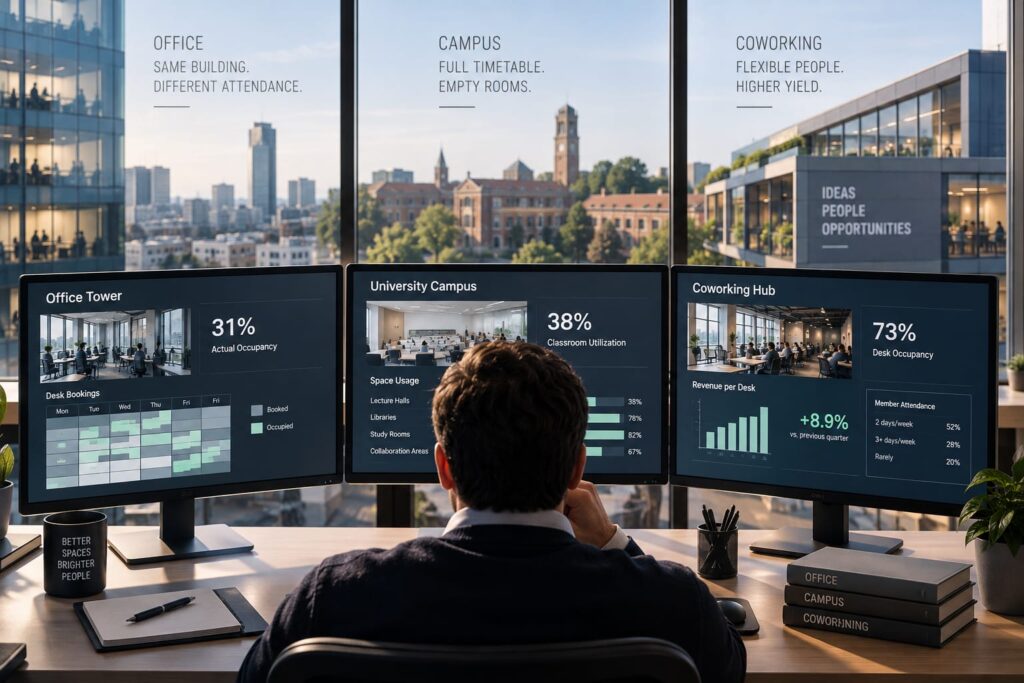
On the same Tuesday morning, three managers open three dashboards. A corporate facilities lead in a downtown office tower watches a floor that the booking sy…
All About Space
A warehouse case study found 38 hours of non-value-added work a day. Its layout changes were one part of a broader program that improved picking and packing efficiency.
Read the essayOn the same Tuesday morning, three managers open three dashboards. A corporate facilities lead in a downtown office tower watches a floor that the booking sy…
Two corporate headquarters agreed to something unusual: before tearing down their walls, they let researchers measure exactly how people worked. For three we…
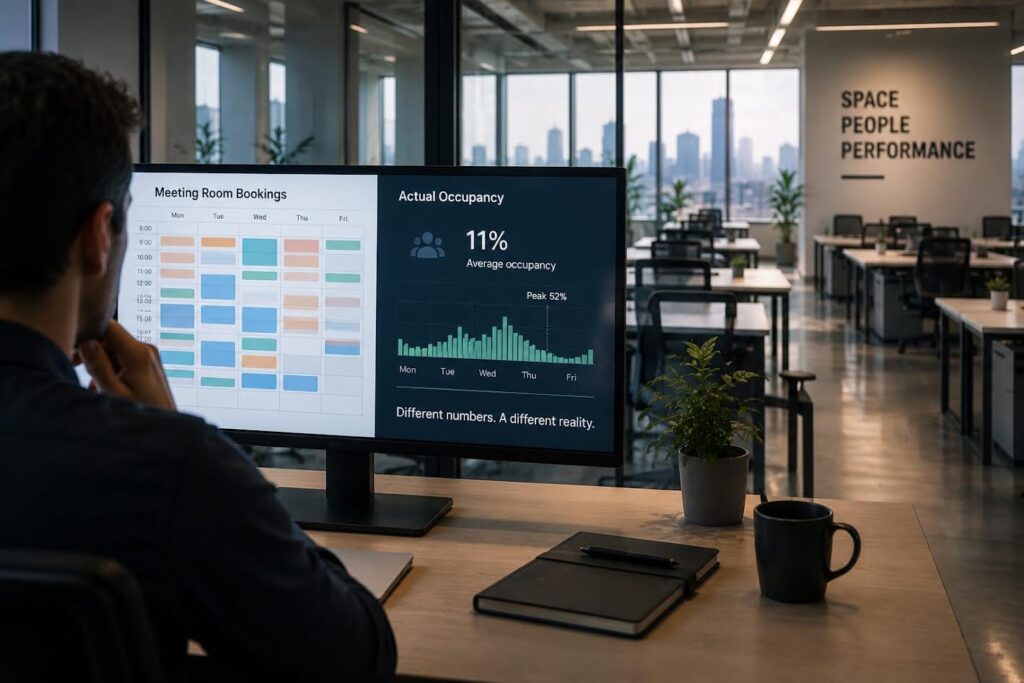
A facilities team pulls up its booking system on a Tuesday afternoon and sees what looks like a healthy office: meeting rooms reserved back to back, desks marked as taken, a calendar that suggests the floor is working exactly as designed. Then the sensor data comes in. Average occupied capacity across the portfolio sits between 9 and 11 percent. Peak capacity, concentrated into a narrow midweek window, reaches 52 to 60 percent. The booking system and the building are describing two different places. This is not a hypothetical - it is the pattern the ninth edition of the Occupancy Intelligence Index has now recorded consistently across a full year of measurement, and it is the moment a growing number of facility managers are confronting for the first time: the numbers they have always trusted were never measuring what they thought.
Workplace Insider
The essay behind every post, straight to your inbox. Three a week. Free.